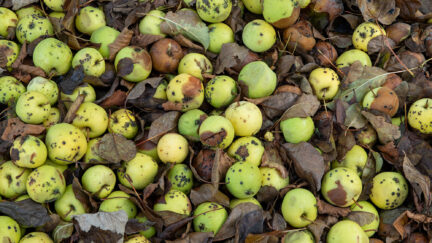
In total, Hereford Cider Museum Trust owns nearly 125 acres of land in Breinton and Yarpole in Herefordshire, because of the generosity of members of the Bulmer family. This includes some 80 acres of orchards in Breinton, just west of Hereford. They are currently not open to the public, but we are developing a programme of events around their use in the future.
Why are orchards in the care of a museum?
The Museum manages land as part of its purpose to advance education for the public benefit in the history of the cider and perry industry. Owning and managing orchards allows the Museum to demonstrate the process of cidermaking from fruit growing through to consumption and to showcase the multiple additional values that orchards provide.
John Teiser, the Museum’s volunteer Conservator of Fruit, oversees work to collect, propagate and research the varieties of cider apples in the orchards. Through FruitID, leaf samples from all but 2 of the current 179 apple varieties have been DNA fingerprinted by Niab East Malling to ensure the validity of the Museum’s fruit collection.
The collection has been awarded National Plant Collection® status for Malus Cider apple trees by UK conservation organisation Plant Heritage, endorsing its importance in preserving heritage cider apple varieties and as a diverse resource to help ensure that cider fruit can withstand future threats, including from climate change.
Photos © E.Pimblett

Orchard names

The Pippin Orchards

Becket’s Orchard

17 Acre and Cottage Orchards